
Marathon Race Strategy: How to Pace, Stay Strong, and Run Your Best Race

You can be in the best shape of your life and still miss your marathon goal.
That’s one of the things that makes the marathon so challenging. You can spend months building your mileage, completing long runs, dialing in your nutrition, and developing the fitness necessary to run your goal time—but you still need to execute on race day.
Run the opening miles too fast, panic when your pace starts slipping, fail to adjust for the weather, or lose focus when the marathon gets hard, and all that fitness may not translate into the performance you trained for.
So, how do you actually race your best marathon?
In Episode 310 of the Healthy Runner Podcast, I sat down with Peter Bromka, a 2:19 marathoner, running coach, writer, and lifelong student of the sport, to talk specifically about marathon race-day execution.
We discussed everything from the final 48 hours before your race to those deceptively easy opening miles, the mental challenge of the middle of the marathon, and what happens when you reach mile 20 and your brain starts telling you to slow down.
Here are some of the biggest lessons runners can take into their next 26.2.
Don’t Waste Your Marathon Fitness! How to Race Your Best
Why Is the Marathon So Difficult to Race Well?
Being fit enough to run a marathon and being able to race a marathon well are two different skills.
Unlike a shorter race, the marathon gives you plenty of opportunities to make mistakes—and you may not discover those mistakes until much later.
You can run too aggressively early and still feel fantastic.
You can get caught up in the excitement of race morning and convince yourself that a pace faster than your plan feels effortless.
You can obsess over hitting a specific pace even though the course or weather conditions are telling you to adjust.
And because the marathon is so long, a decision you make at mile 5 may not reveal its consequences until mile 20.
That is why successful marathon racing requires more than fitness. It requires patience, discipline, adaptability, and confidence in your plan.

What Should You Do 24–48 Hours Before a Marathon?
One of the biggest mistakes runners make before a goal marathon is trying to squeeze in something extra.
At this point, the training is done.
You are not going to gain additional marathon fitness during the final 24–48 hours. Your job is to arrive at the starting line rested, fueled, hydrated, and mentally prepared to race.
Keep your routine as familiar as possible.
This isn’t the time to experiment with new foods, spend hours walking around the race expo, try a new pair of shoes, or suddenly change the fueling strategy you’ve practiced throughout training.
Think of those final days as an opportunity to protect the fitness you’ve already built, rather than trying to add to it.
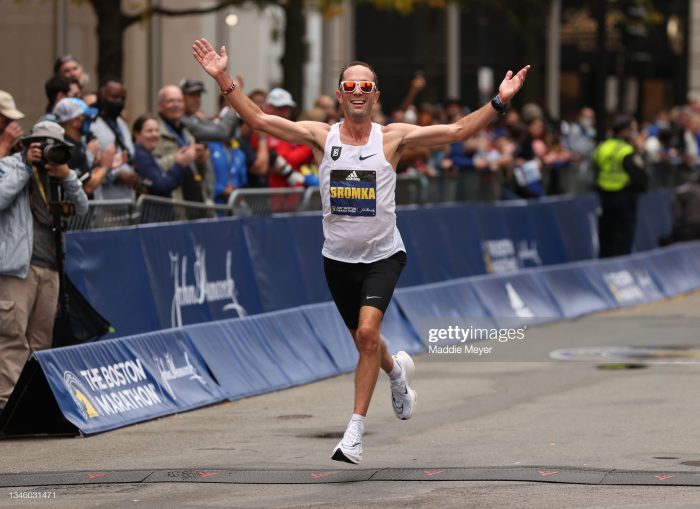
How Should the First 3–5 Miles of a Marathon Feel?
For many runners, the most dangerous part of a marathon is when they feel their best.
The opening miles should feel controlled.
After tapering, carb loading, resting, and standing on a starting line surrounded by thousands of excited runners, your planned marathon pace may feel surprisingly easy.
That’s exactly why you need discipline.
The goal isn’t to prove how fit you are during the first 5K. The goal is to put yourself in a position to race well during the final 10K.
If your planned pace feels almost too easy early in the race, that can be a good sign.
Resist the temptation to “bank time” because you’re feeling good.
Those extra seconds you gain early can become very expensive later.
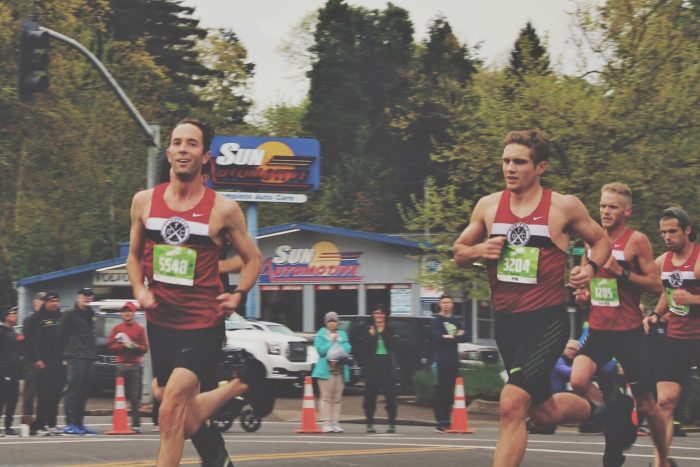
What Should You Focus on During Miles 6–18?
The middle portion of a marathon presents a unique mental challenge.
You’re no longer enjoying the excitement of the starting line, but you’re also nowhere near the finish.
This is where execution becomes important.
Rather than thinking about how many miles remain, focus on what you can control right now:
-Stay relaxed.
-Maintain an appropriate effort.
-Continue your fueling and hydration plan.
-Pay attention to your form.
-Check in with how your body is feeling.
-Avoid getting pulled into someone else’s race.
Breaking the marathon into smaller segments can also make the distance feel much more manageable.
Instead of thinking, “I still have 14 miles to go,” focus on getting to your next fuel, aid station, landmark, or mile marker.
Your job during this portion of the race is not necessarily to attack.
It’s to stay patient and keep putting yourself in position to race later.
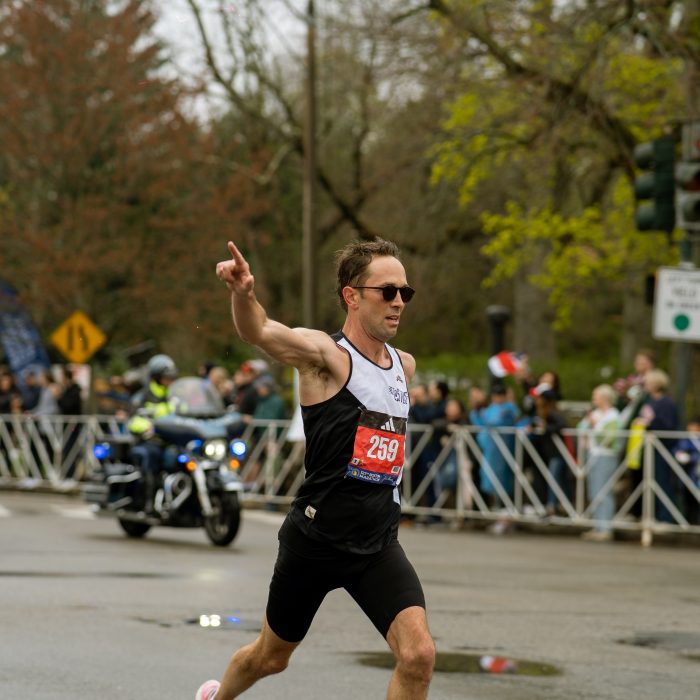
What Changes During the Final 10K?
Mile 20 is where the marathon becomes a very different race.
You’ve already run 20 miles, but you still have more than six miles remaining.
This is also where fatigue can make your brain start negotiating with you.
“Maybe I should slow down.”
“I don’t know if I can hold this.”
“I’m not going to make it.”
This is where the mental skills you’ve developed throughout training become incredibly important.
Instead of thinking about the entire 10K, shrink the race.
Get to the next mile marker.
Get to the next aid station.
Catch the runner ahead of you.
Focus on your breathing, posture, cadence, or another simple cue.
The goal is to stay present instead of allowing your mind to project how difficult the next six miles might feel.
If you’ve raced patiently and you’re still feeling strong, this is also where you can begin asking more of yourself.
The first miles are about restraint.
The final miles are where you get to use the fitness you’ve protected all day.
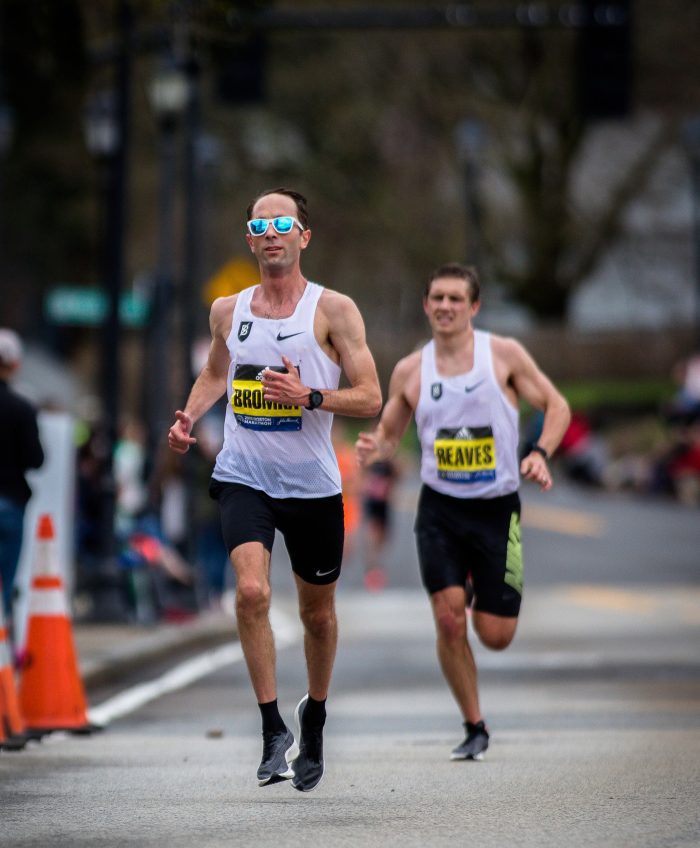
What Should You Do When Your Brain Tells You to Slow Down?
There is an important difference between something being wrong and the marathon simply becoming hard.
Late in a marathon, discomfort and fatigue are expected.
Your brain may begin sending very convincing messages that slowing down would feel much better—and it probably would!
That doesn’t automatically mean you need to stop pushing.
This is where simple mental strategies can help.
Use short cues you’ve practiced in training.
Think about your “why.”
Focus only on the mile you’re currently running.
Recall difficult workouts you’ve already completed.
Give yourself a small objective rather than trying to mentally conquer the entire remaining distance.
Of course, runners also need to recognize when symptoms suggest something more serious than normal race-day fatigue. Racing hard doesn’t mean ignoring genuine warning signs from your body.
But when you’re simply experiencing the expected difficulty of racing a marathon, remind yourself:
Hard does not automatically mean something is going wrong.
Sometimes hard means you’re finally racing.

What If You Start Falling Off Goal Pace?
This is one of the most important moments in any marathon.
You look down at your watch and realize you just ran a slower mile than planned.
Then another.
The instinct may be to panic and immediately try to “make up” the lost time.
That can turn a manageable problem into a much bigger one.
One slower mile doesn’t determine your marathon.
Instead, assess what’s happening.
Was there a hill?
Did you run into a headwind?
Are temperatures rising?
Did you miss fuel or hydration?
Did you simply lose focus?
Or is your original goal pace no longer appropriate for how you’re feeling?
Respond to the race you’re actually running rather than becoming emotionally attached to the race you imagined beforehand.
Sometimes the smartest decision is to settle back into your planned effort.
Other times, conditions require you to adjust your expectations.
The key is to avoid turning one difficult mile into five difficult miles because you panicked.

When Should You Stop Racing by Pace and Start Racing by Effort?
Your watch doesn’t know the weather.
It doesn’t know you’re climbing a hill.
It doesn’t know you’re running into a headwind.
And it doesn’t know how your body is responding to the conditions.
Your marathon pace is based on a particular level of effort under certain circumstances. When the circumstances change significantly, trying to force the same pace may dramatically increase the effort required.
That’s why experienced runners learn to balance pace with perceived effort.
On hills, into strong wind, or during unusually warm conditions, it may be smarter to allow pace to slow while maintaining an appropriate marathon effort.
You can reassess when conditions improve.
Your goal isn’t to win every individual mile.
Your goal is to run the best possible 26.2 miles.
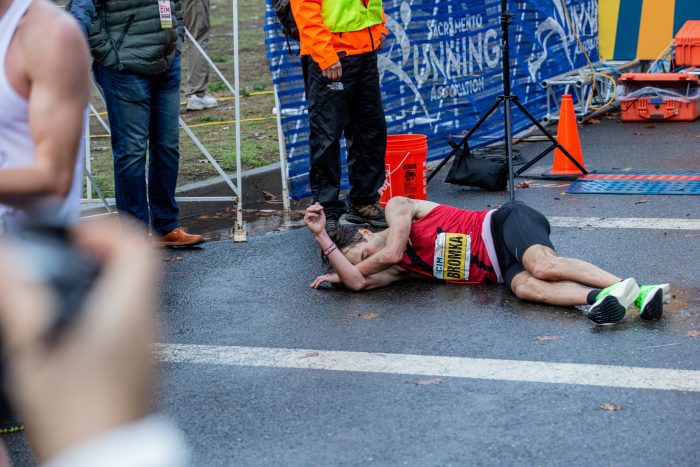
The Biggest Marathon Race-Day Mistake
Many marathon mistakes ultimately come back to the same problem:
Trying to force the race instead of allowing it to develop.
The marathon rewards patience.
You don’t need to feel amazing every mile.
You don’t need every split to be perfect.
And you don’t need to know at mile 8 whether you’re going to achieve your goal.
You need to continue making good decisions.
That means respecting the early miles, staying on top of fueling, adjusting when necessary, and saving some of your competitive energy for when the race truly begins to demand it.
The Healthy Runner Question: What’s ONE Thing Adult Runners Should Change?
I’m starting to ask every expert who comes on the Healthy Runner Podcast one question:
If you could change ONE thing most adult runners do to help them stay healthy, run faster, and keep running for years to come, what would it be?
I asked Peter that question during this conversation as well.
It’s an important reminder that running your best marathon isn’t simply about one race.
Our bigger goal as Healthy Runners is to continue developing the habits that allow us to get stronger, improve our performance, stay healthy, and enjoy this sport for many years to come.
How to Race Your Best Marathon
You don’t need a perfect marathon to run a great marathon.
Something unexpected will probably happen.
A mile may be slower than planned.
The weather may not cooperate.
Your legs may start hurting earlier than you’d hoped.
Your brain may tell you that you can’t maintain the pace.
Successful marathon racing isn’t about eliminating all of those moments.
It’s about responding to them well.
Remember these principles when you line up for your next marathon:
Be patient early.
Stay present during the middle miles.
Fuel consistently.
Race the conditions you’re given.
Don’t panic when something doesn’t go perfectly.
Save your strongest mental effort for when the marathon truly gets hard.
You spent months building your fitness.
Now your job is to give that fitness the opportunity to show up on race day.
Want More Help Preparing for Your Marathon?
If you have a marathon coming up, grab our FREE Ultimate Marathon Training Guide.
It walks you through the key pieces you need to train smarter, stay healthy, and prepare for your strongest 26.2.
Get the FREE Ultimate Marathon Training Guide
And if your goal marathon is right around the corner and you’re about to start tapering, check out Episode 309 of the Healthy Runner Podcast, where I break down exactly how to taper for your marathon so you can arrive at the starting line feeling fresh, confident, and ready to perform.
Then listen to my full conversation with Peter Bromka in Episode 310 of the Healthy Runner Podcast for even more marathon race-day strategy, mental tips, and Peter’s three biggest keys to getting the most out of your fitness on race day.
Let’s continue to grow a strong mind, strong body, and Just Keep Running!

If you’re looking to dial in your running, strength training, and nutrition, overcome recurring injuries, and train smarter for your next race, we’d love to help.
With Healthy Runner Coaching, you’ll get an individualized run and strength plan with expert coaching and support based on your goals and how your body is responding.
Or join the Healthy Runner Academy for our step-by-step system to help you get stronger, stay healthy, and become a lifelong runner.
Learn More About Healthy Runner Coaching
Join the Healthy Runner Academy
Your race-day hydration strategy shouldn’t start on race day! 💦

It’s something you should be practicing during your long runs NOW, especially if you’re gearing up for a fall half marathon or marathon.
Trust me, I learned this lesson the hard way.
During my first marathon, I cramped up and ended up walking the final 6 miles 😩
And I still remember those hot, sweaty long runs when I’d finish completely wiped out and spend the rest of the day as a lump on the couch instead of enjoying time with my family.
Over the years, I’ve learned that hydration and fueling deserve just as much attention as our running and strength training.
That’s why LMNT has become a staple in my hydration routine.
Each stick pack contains:
-1,000 mg sodium
-200 mg potassium
-60 mg magnesium
-Zero sugar or artificial colors
As a running physical therapist and coach, one of the biggest lessons I share with my athletes is this:
Nothing new on race day!
Use your long runs to figure out your hydration and fueling needs, what works for your stomach, and how much fluid and sodium you need based on your sweat losses and conditions.
Remember, electrolytes are one piece of the puzzle. Your carbohydrate fueling and overall hydration strategy matter, too!
And I’ve got a special offer to help you get started. 👇🏼
🎁 FREE 8-Count LMNT Sample Pack!
Get a FREE sample pack of LMNT’s most popular flavors with any purchase even if you’ve ordered before!
Claim Your FREE LMNT Sample Pack Free sample pack with any purchase
With fall race season here, now is a great time to dial in your hydration strategy instead of waiting until you’re standing at the starting line.

About Peter Bromka
Peter Bromka is a 2:19 marathoner, running coach, writer, and lifelong student of the sport. Raised in Portland, Oregon, in one of the country’s most vibrant running communities, Peter went on to compete collegiately at Tufts University in Boston before developing into an accomplished amateur marathoner.
Peter is perhaps best known for his pursuit of the U.S. Olympic Marathon Trials qualifying standard and for the thoughtful writing that came from that journey. His work explores the physical, mental, and emotional sides of running—from marathon performance and racing to the meaning we find in pursuing difficult goals.
Running and writing have remained closely connected throughout Peter’s life, allowing him to share his experiences and connect with runners around the world.
Peter is also a co-host of the Road to the Trials Podcast, where he helps tell the stories of Olympic Marathon Trials qualifiers while exploring the coaches, sports scientists, race directors, and other experts who support athletes pursuing their highest level of performance.
Today, Peter lives in Portland, Oregon, where he continues to run, write, coach, and share his passion for the marathon and the sport of running.
Connect with Peter Bromka:
– Instagram: @bromka
Get my full personal running story here

There are six parts of your running journey that need to be optimized so you can run strong and last long! Learn them here.
Want these to land in your inbox each and every week so you can learn how to become a stronger, faster, lifelong injury free runner?

Subscribe to my weekly newsletter here!
Thanks for reading!
Yours in health,
Duane
Connect with Dr. Duane:

Dr. Duane Scotti, DPT, PhD, OCS is a running physical therapist, run coach, host of the Healthy Runner podcast, and founder of Spark Healthy Runner and has been a leader in the rehab and running community for 20+ years.
Duane initially started running as an adult, wanting to add some cardio to his gym sessions. After having hip surgery, his doctor advised him to get off the treadmill and run outside. Without having fully recovered, Duane suffered his first running-related hamstring tendon injury and many others as a novice runner early on.
As a coach, he has guided thousands of athletes back to running, finishing their first marathon, crushing a personal best, and even the elusive Boston Marathon qualifying time.
After 19 years teaching in higher education, Duane decided to step away as a Clinical Associate Professor of Physical Therapy to pursue his passion educating the running community. Through his signature 1:1 coaching program, Healthy Runner Academy membership, weekly videos, and podcast episodes, he empowers runners to get stronger, run faster, and enjoy lifelong injury free running without having to stop running to get over an injury. Dr. Duane truly believes that anyone can run and that all runners should be treated differently when recovering from an injury. He is on a mission to change the traditional thinking that running causes “overuse injuries” or “your body is just not meant to run” and you must “take a break” to get better. Through strength and run specific training you can grow a strong mind, strong body, and just keep running!
Duane received his Bachelor of Health Science degree and Master of Physical Therapy degree from Quinnipiac University in 2001 and 2003. He then went on to receive a clinical Doctor of Physical Therapy and a Ph.D. in Physical Therapy from Nova Southeastern University in 2017. Duane is a board-certified Orthopaedic Clinical Specialist, RRCA Certified Running Coach, Certified Mulligan Practitioner, certified in dry needling and has advanced training in spinal manipulation and rehabilitation for runners.
As an athlete, Duane is an adult-onset runner, 6x marathoner, avid half marathoner, and enjoys challenging himself to learn and grow in his personal running journey!
A native New Yorker from Long Island, Duane currently lives in Cheshire, Connecticut with his wife Deb and his two teenage daughters who are competitive volleyball players. They all love to explore new beaches along the east coast.
Get weekly running tips on the Healthy Runner Podcast…available wherever you get your podcasts!


Related posts
Learn the best marathon race strategy for pacing, mindset, and the final 10K so you can avoid common mistakes and run your best 26.2.Read More

Learn how long to taper, how much to reduce your mileage, what to do with speed and strength training, and the biggest taper mistakes to avoid before race day.Read More

Learn how to keep running strong after 40 with insights from Jon Levitt. Discover the training, recovery, and mindset strategies that help runners stay healthy for life.Read More

“I don’t have enough words to express my gratitude towards Duane Scotti and the Spark Healthy Runner program. When I started working with Duane, I had been dealing with chronic shin splints/posterior tibialis tendinitis for almost a year.
I had worked with multiple other coaches and physical therapists with little success and was at the point of almost giving up on my love for running. Duane is so kind, thoughtful and knowledgeable as both a physical therapist and running coach. Our first virtual meeting lasted two hours because he was so meticulous in his assessment. His strength and running program is progressive and created so that you can continue to build strength and mileage as you heal. His strength program is unique, effective, and fun.
Additionally, his warm-up routine is awesome and includes drills that over time have made me a more efficient runner. His training platform is easy to use, and he is always readily available to chat when problems or questions arise.
Over four months of working with Duane, I have built back to five days a week of running and am almost back up to my pre-injury weekly mileage and long run distance. Whenever I have flare ups or setbacks, Duane reassures me and makes necessary adjustments so that I can continue to progress in my running journey. I have had so much success with him so far that I have signed on for four more months so that he can help me to continue getting stronger as I train for the Dopey challenge in Disney World.
If you are struggling with a running injury and are feeling hopeless, you have to reach out to Duane Scotti. Of course, you will have to put in a lot of hard work, but with Duane by your side, you will be able to achieve your goals and more. Thank you Spark Healthy Runner for bringing the spark back to my running!”

You can teach an old dog new tricks!!! I have never considered myself a runner and I knew I needed to be smart about it because I am no spring chicken. Spark preached getting strong and healthy to be injury free and they practice what they preach. I am soooo glad I made the investment in me! I finished my half marathon last weekend and couldn’t be any happier! The program fed me all the steps I needed to essentially learn how to run long distance, build strength, nutrition help, a forum of other runners and probably most important was the 1:1 coaching. I had no idea how to tackle training for a 1/2 marathon and this program broke all of it down, had it individualized for me and we tweaked as we went to make sure I was staying healthy and strong. I had so many questions the week prior to my race and Coach Cat was always there for me and answering all the questions and issues I had-and believe me there were a lot! The biggest benefit I think I got was the strength. I am strong and fit. But most important was what I gained emotionally. I built confidence and strength I didn’t know I had, even at my age. Honestly could not have done this without Spark Healthy Runners!

My Healthy Runner journey started after I had battled bilateral achilles pain for a few months and was frustrated how it affected my running. As soon as I talked to Duane I knew I had made the right decision. His positivity, enthusiasm and genuine care are infectious. The training plan that was tailored to me included specific exercises to rehab my injury and I was so excited that I didn’t have to stop running. It took patience to only run slow for a few weeks but I trusted the process and it got me me to where I am now: running pain free. We made adjustments to the plan throughout whenever needed having someone in your corner that is always there with guidance and support throughout the process was invaluable.
I just ran my second half marathon, both with Duane’s coaching, and PR’d by over 9 minutes! I got all choked up in the last mile when I realized that I felt strong and could still kick it up a notch.
I’m so thankful for the Healthy Runner program, community and the entire coaching team for all the support!