
Half Marathon Recovery Tips That Actually Work (Run Stronger & Stay Injury-Free)
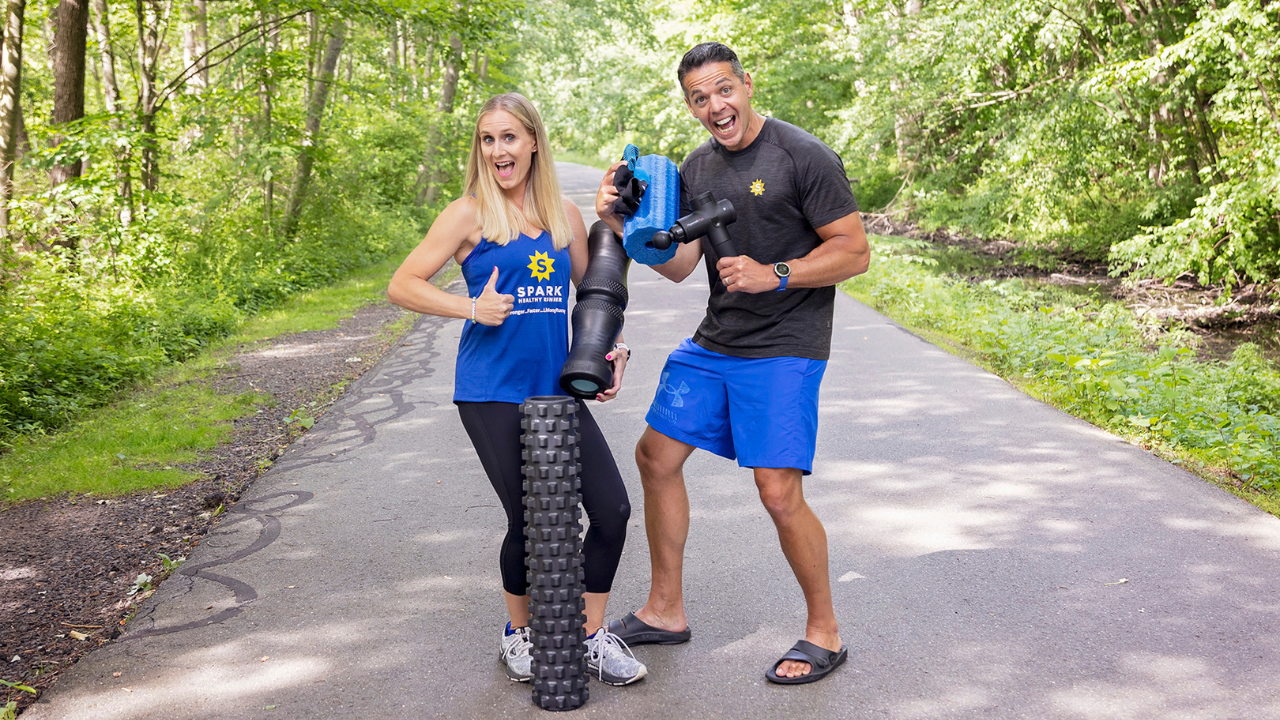
If you’re training for a half marathon and constantly feeling sore, tired, or beat up after your runs… you’re not alone.
Most runners think recovery means stretching, foam rolling, or maybe taking an ice bath.
Those things can help.
But real recovery is much bigger than that.
Recovery is the set of habits that allow your body to absorb training, repair tissue, adapt, and come back stronger.
Because here’s the truth most runners don’t realize:
Training is the stimulus.
Recovery is where adaptation happens.
If recovery is missing, you don’t get fitter. You just get more fatigued.
And that’s when you start to notice:
Heavy legs that never seem to go away
Lingering soreness after runs
Little aches turning into nagging injuries
Missed runs and frustrating stop start cycles
If you want to run stronger, stay healthy, and train consistently for your half marathon, recovery has to become part of your system.
Let’s walk through six recovery strategies that actually work.
Half Marathon Recovery Tips That Actually Work (Do This!)
Why Recovery Is the Missing Piece for Many Runners
Many runners approach recovery as something they do when they’re injured.
But recovery is not a backup plan. It’s part of the training process.
Think about it like this:
Training breaks your body down.
Recovery builds it back stronger.
The goal of recovery isn’t to eliminate soreness completely. Some soreness is normal.
The goal is to create enough recovery so you can keep showing up consistently and continue building fitness week after week.
Consistency is where progress happens.
And that starts with how you recover.
1. Take Real Rest Days
Let’s start with something simple but incredibly important.
How many rest days should a runner take each week?
At minimum, most runners should take one full rest or recovery day per week.
That means no running and no strength training.
For many adult runners, especially runners over 40, two recovery days per week often works even better.
Now, that doesn’t mean you have to lay on the couch all day.
Recovery days can include:
Easy walking
Light cycling in Zone 1 or Zone 2
Gentle mobility work
Restorative yoga
What you want to avoid is impact, hard cardio, or heavy lifting.
Those rest days give your body time to repair tissue and absorb the work you’ve already done.
And that’s where progress starts to happen.
2. Prioritize Sleep
Sleep is the most powerful recovery tool you have.
Research consistently shows that athletes who improve their sleep experience better performance, faster reaction times, improved mood, and greater energy.
On the other hand, poor sleep can lead to:
Slower performance
Higher injury risk
Lower immunity
Increased fatigue
Many runners struggle to consistently get enough sleep.
The goal isn’t perfection.
The goal is intention.
A good target is seven to nine hours of sleep each night.
Simple habits can make a big difference:
Keeping a consistent bedtime and wake time
Sleeping in a dark, cool room
Limiting screens before bed
Creating a wind down routine
Reducing late caffeine and alcohol
If the only thing you improved in your training cycle was adding thirty more minutes of sleep each night, you would likely feel a noticeable difference.
3. Use Foam Rolling to Help Your Body Downshift
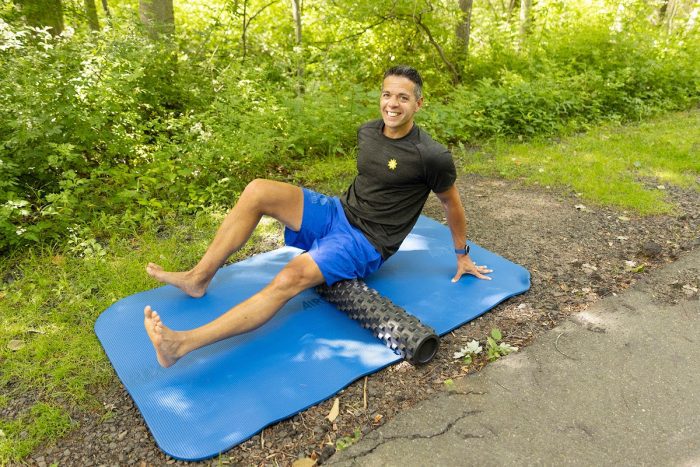
Foam rolling is one of the most common recovery tools runners use.
But it doesn’t have to be complicated.
Foam rolling can help increase blood flow, relax muscles, and improve movement.
More importantly, it helps your nervous system shift into a more relaxed state.
Think of foam rolling as a signal to your body that it’s time to downshift and recover.
You don’t need long sessions.
Five to ten minutes of foam rolling after a run or later in the day can go a long way.
Consistency matters far more than doing a long routine once in a while.
4. Stretching and Soft Tissue Work
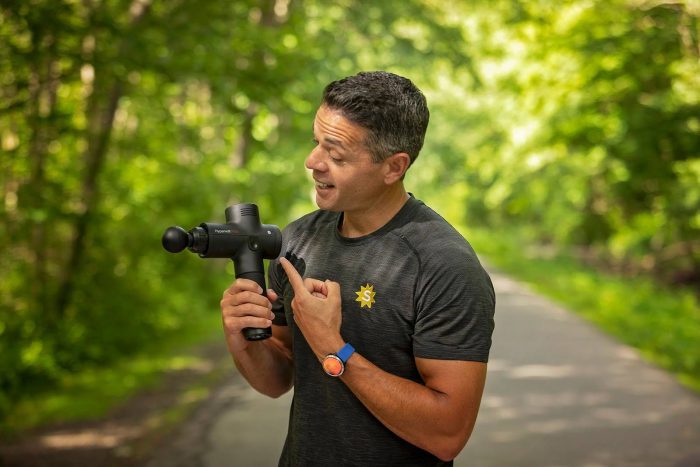
Massage therapy, percussion guns, and stretching all fall into this category.
The goal of these tools is to increase circulation, reduce muscle tightness, and restore movement.
Timing matters here.
Dynamic stretching before runs helps prepare the body by increasing blood flow and activating the muscles you’ll use while running.
Static stretching after runs can help relax the muscles and calm the system down.
You don’t need a thirty minute routine.
Just a few consistent stretches focusing on the key muscle groups runners rely on can make a big difference in how your body feels between runs.
5. Compression Socks Can Help Some Runners
Compression socks are another tool that some runners find helpful.
Graduated compression can support circulation and may help reduce the heavy leg feeling some runners experience after long runs or long days on their feet.
They’re not mandatory.
But they can be useful, especially during long workdays or after harder efforts.
Think of them as an optional recovery tool that may help you feel better between runs.
6. Don’t Ignore Foot Care
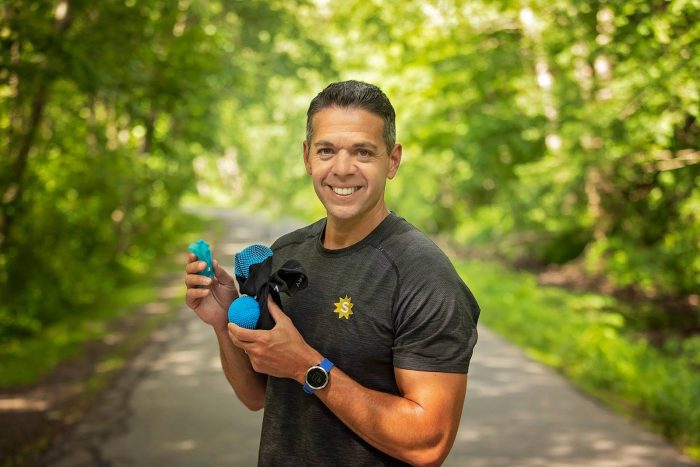
Your feet absorb thousands of impacts during every run.
But they’re often the most overlooked part of recovery.
Simple foot care can make a big difference in how your body feels overall.
Some helpful strategies include:
Epsom salt foot soaks
Rolling the foot on a ball or roller
Using toe spacers
Elevating your feet after long runs
Wearing recovery slides or sandals
Healthy feet support better running mechanics and help reduce stress up the entire kinetic chain.
A big thanks to Naboso for your support for this episode!
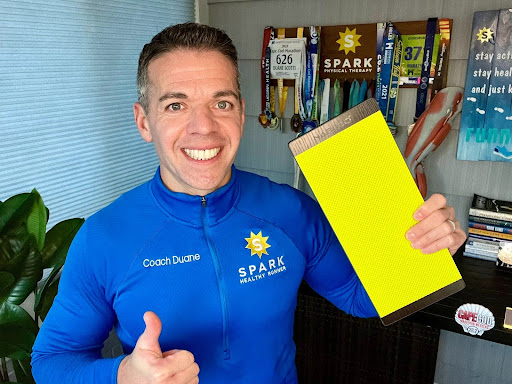
Want to know how I prioritize foot and ankle health to prevent injuries as a runner? Kinesis board and toe splays from Naboso!
Naboso’s product, the Kinesis board features dual sensory stimulation, a micro-wobble system and a single-leg platform to improve my stability for running!
Click here and use code HEALTHYRUNNER for 20% off your entire Naboso order!
A Real Runner Example
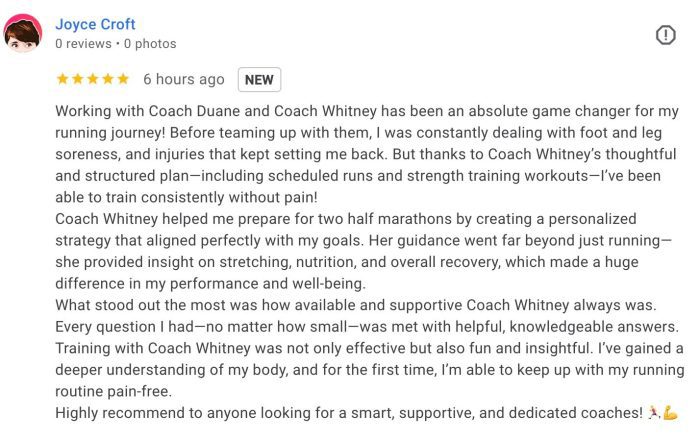
We recently worked with a runner named Joyce who had been struggling with recurring foot and leg soreness.
She felt stuck in a cycle many runners experience.
Run a little.
Feel sore.
Back off.
Try again.
Because of that cycle, she was never able to build consistent training.
Instead of just pushing through the soreness, she started working with Coach Whitney on a structured plan that included strength training, smart running progression, and recovery habits.
The focus wasn’t just on running more.
It was on supporting her body so she could recover and adapt between runs.
The result?
Joyce went from constant soreness and setbacks to training consistently without pain.
She was able to prepare for two half marathons and feel strong doing it.
The difference wasn’t just more training.
It was having a recovery system that supported her training.
Build a Recovery System That Works
Recovery isn’t about doing random things after a run.
It’s about building a system that allows your body to absorb the work you’re putting in.
When recovery improves, a lot of things start to change.
Your legs feel lighter.
Your pace starts improving.
Little aches stop lingering.
And your confidence as a runner grows.
So instead of asking:
“What should I do after my run today?”
Start asking:
“Do I have a recovery system that supports my training?”
Because strong runners recover well.
Healthy runners get to train.
And runners who get to train consistently get to finish strong.
[Download] Half Marathon Training Kickstart Kit: Start Strong and Stay Injury Free!
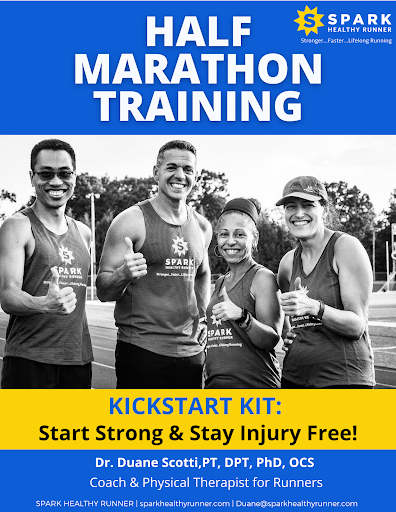
Free Resource for Half Marathon Runners
If you’re training for a half marathon and want a simple plan to start strong and stay injury free, I created a free resource for you.
The Half Marathon Training Kickstart Kit includes:
Your first two weeks of a half marathon training plan
Runner specific strength routines
Recovery strategies to stay consistent
Mindset guidance to avoid burnout
You can grab your copy here!
Want a Step by Step Strength System?
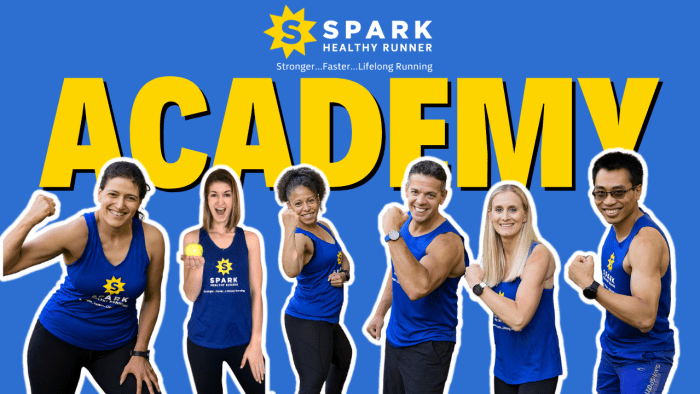
Inside Healthy Runner Academy, you get:
– Stage based strength plans
– Run programming that matches your life
– Coaching support
– Adjustments when aches and pains pop up
– A supportive community of runners
If you want structured support without guessing, learn more here!
What our Athletes Are Saying…
Watch how Suzana went from feeling lost to getting stronger and running her first half marathon
Watch how Dinah went from injured treadmill runner to running with joy at the Disney Half Marathon WITHOUT PAIN!
Looking for 1-on-1 guidance, structure, support, and accountability? Check out our signature Spark Healthy Runner Coaching here!

Watch how Sheila went from never running long distances to running a sub 2 hour half marathon
Watch how Lindsay got over runners knee to run her fastest half marathon
Listen to my previous episode on half marathon fueling here!
Listen to my previous episode on unlocking my fastest half marathon time in 7 years here!

Listen to my previous episode on the top 5 half marathon mistakes to avoid here!
Listen to my previous episode on half marathon prep the week before your race here!
There are six parts of your running journey that need to be optimized so you can run strong and last long! Learn them here.
Want Dr. Duane to answer your question on the podcast? Submit your running and health questions here!
Get my full personal running story here

There are six parts of your running journey that need to be optimized so you can run strong and last long! Learn them here.
Want these to land in your inbox each and every week so you can learn how to become a stronger, faster, lifelong injury free runner?

Subscribe to my weekly newsletter here!
Thanks for reading!
Yours in health,
Duane
Connect with Dr. Duane:

Dr. Duane Scotti, DPT, PhD, OCS is a running physical therapist, run coach, host of the Healthy Runner podcast, and founder of Spark Healthy Runner and has been a leader in the rehab and running community for 20+ years.
Duane initially started running as an adult, wanting to add some cardio to his gym sessions. After having hip surgery, his doctor advised him to get off the treadmill and run outside. Without having fully recovered, Duane suffered his first running-related hamstring tendon injury and many others as a novice runner early on.
As a coach, he has guided thousands of athletes back to running, finishing their first marathon, crushing a personal best, and even the elusive Boston Marathon qualifying time.
After 19 years teaching in higher education, Duane decided to step away as a Clinical Associate Professor of Physical Therapy to pursue his passion educating the running community. Through his signature 1:1 coaching program, Healthy Runner Academy membership, weekly videos, and podcast episodes, he empowers runners to get stronger, run faster, and enjoy lifelong injury free running without having to stop running to get over an injury. Dr. Duane truly believes that anyone can run and that all runners should be treated differently when recovering from an injury. He is on a mission to change the traditional thinking that running causes “overuse injuries” or “your body is just not meant to run” and you must “take a break” to get better. Through strength and run specific training you can grow a strong mind, strong body, and just keep running!
Duane received his Bachelor of Health Science degree and Master of Physical Therapy degree from Quinnipiac University in 2001 and 2003. He then went on to receive a clinical Doctor of Physical Therapy and a Ph.D. in Physical Therapy from Nova Southeastern University in 2017. Duane is a board-certified Orthopaedic Clinical Specialist, RRCA Certified Running Coach, Certified Mulligan Practitioner, certified in dry needling and has advanced training in spinal manipulation and rehabilitation for runners.
As an athlete, Duane is an adult-onset runner, 6x marathoner, avid half marathoner, and enjoys challenging himself to learn and grow in his personal running journey!
A native New Yorker from Long Island, Duane currently lives in Cheshire, Connecticut with his wife Deb and his two teenage daughters who are competitive volleyball players. They all love to explore new beaches along the east coast.
Get weekly running tips on the Healthy Runner Podcast…available wherever you get your podcasts!


Related posts

What are macros and how do they fit into a runner’s diet? We are talking about the basics of nutrition for running with registered dietitian Brooke Czarnecki on the Healthy Runner Podcast. Brooke is our healthy runner go to expert when it comes to running nutrition and she will discuss how carbohydrates, proteins, and fats… View ArticleRead More

How do you travel for a race? There is no need to stress about a destination marathon or half marathon. Overcome fear with this 4-step race travel guide! Coach Whitney LaCombe from our Spark Healthy Runner team shares 4 key tips on traveling stress free for your next race. In this episode, we’ll… View ArticleRead More

Learn the best marathon race strategy for pacing, mindset, and the final 10K so you can avoid common mistakes and run your best 26.2.Read More

“I don’t have enough words to express my gratitude towards Duane Scotti and the Spark Healthy Runner program. When I started working with Duane, I had been dealing with chronic shin splints/posterior tibialis tendinitis for almost a year.
I had worked with multiple other coaches and physical therapists with little success and was at the point of almost giving up on my love for running. Duane is so kind, thoughtful and knowledgeable as both a physical therapist and running coach. Our first virtual meeting lasted two hours because he was so meticulous in his assessment. His strength and running program is progressive and created so that you can continue to build strength and mileage as you heal. His strength program is unique, effective, and fun.
Additionally, his warm-up routine is awesome and includes drills that over time have made me a more efficient runner. His training platform is easy to use, and he is always readily available to chat when problems or questions arise.
Over four months of working with Duane, I have built back to five days a week of running and am almost back up to my pre-injury weekly mileage and long run distance. Whenever I have flare ups or setbacks, Duane reassures me and makes necessary adjustments so that I can continue to progress in my running journey. I have had so much success with him so far that I have signed on for four more months so that he can help me to continue getting stronger as I train for the Dopey challenge in Disney World.
If you are struggling with a running injury and are feeling hopeless, you have to reach out to Duane Scotti. Of course, you will have to put in a lot of hard work, but with Duane by your side, you will be able to achieve your goals and more. Thank you Spark Healthy Runner for bringing the spark back to my running!”

You can teach an old dog new tricks!!! I have never considered myself a runner and I knew I needed to be smart about it because I am no spring chicken. Spark preached getting strong and healthy to be injury free and they practice what they preach. I am soooo glad I made the investment in me! I finished my half marathon last weekend and couldn’t be any happier! The program fed me all the steps I needed to essentially learn how to run long distance, build strength, nutrition help, a forum of other runners and probably most important was the 1:1 coaching. I had no idea how to tackle training for a 1/2 marathon and this program broke all of it down, had it individualized for me and we tweaked as we went to make sure I was staying healthy and strong. I had so many questions the week prior to my race and Coach Cat was always there for me and answering all the questions and issues I had-and believe me there were a lot! The biggest benefit I think I got was the strength. I am strong and fit. But most important was what I gained emotionally. I built confidence and strength I didn’t know I had, even at my age. Honestly could not have done this without Spark Healthy Runners!

My Healthy Runner journey started after I had battled bilateral achilles pain for a few months and was frustrated how it affected my running. As soon as I talked to Duane I knew I had made the right decision. His positivity, enthusiasm and genuine care are infectious. The training plan that was tailored to me included specific exercises to rehab my injury and I was so excited that I didn’t have to stop running. It took patience to only run slow for a few weeks but I trusted the process and it got me me to where I am now: running pain free. We made adjustments to the plan throughout whenever needed having someone in your corner that is always there with guidance and support throughout the process was invaluable.
I just ran my second half marathon, both with Duane’s coaching, and PR’d by over 9 minutes! I got all choked up in the last mile when I realized that I felt strong and could still kick it up a notch.
I’m so thankful for the Healthy Runner program, community and the entire coaching team for all the support!