
Post Race Reflection: 5 Questions to Ask After Your Marathon or Half Marathon
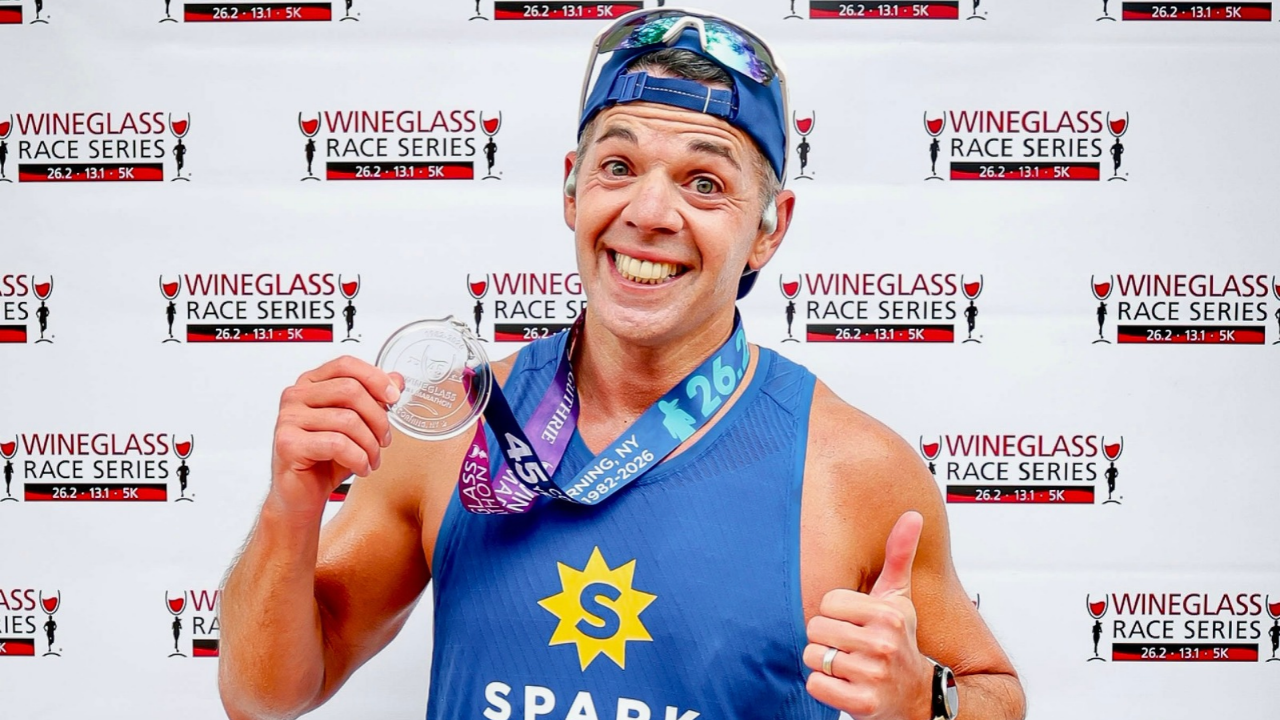
Your finish time tells you how fast you ran. Your reflection tells you how you can GROW!
What’s the first thing you do after finishing a race?
Maybe you grab your medal, check your watch, celebrate with friends, or immediately start thinking about your next running goal.
But there’s one important thing most runners skip after crossing the finish line.
Taking the time to reflect on their race.
And I’m not talking about analyzing every mile split or obsessing over whether you hit your goal pace.
I’m talking about looking at the entire experience, from your training and preparation to your race-day execution, and asking yourself what you can learn.
Because whether you just completed your first 5K, your tenth half marathon, or you’re chasing a marathon personal record, every race offers an opportunity to become a stronger, healthier, and more confident runner.
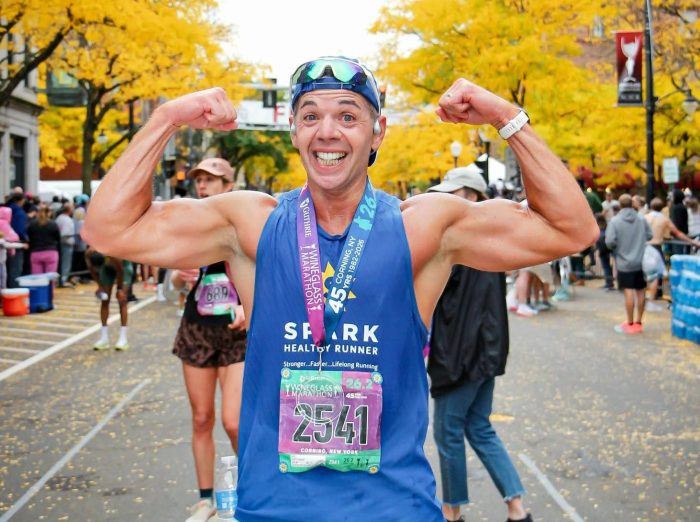
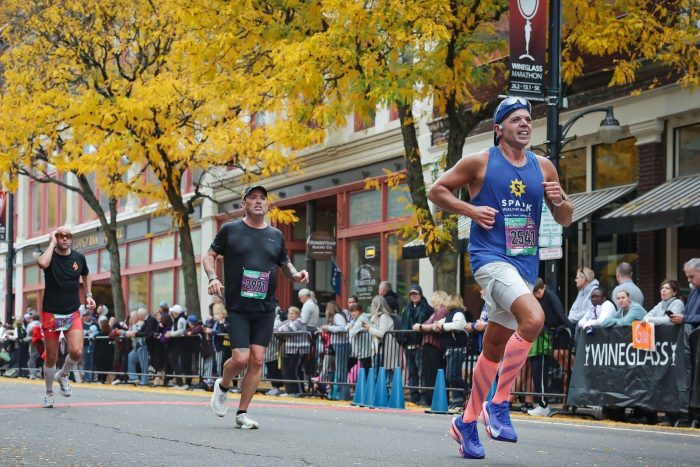
I was reminded of this after completing my ninth marathon at the Wineglass Marathon in Corning, New York.
I finished in 3:42:42, just 2 minutes and 4 seconds away from my marathon PR.
5 Questions You MUST Ask After Every Race (Most Runners Don’t!)
But here’s the interesting part.
Even though I missed my traditional PR, I actually ran an age-graded marathon PR at 46 years old!
And when I took the time to reflect on my performance, I realized just how much I had accomplished.
In this article, I’m walking you through the 5 post race reflection questions every runner should ask, using my own Wineglass Marathon experience to show you how this process works.
🎁 FREE Post Race Reflection Worksheet: Download Your Worksheet Here
Use it to follow along and capture your biggest lessons from your last race!
Why Is Post Race Reflection Important for Runners?
Think about how much time you spend preparing for a race.
If you’re training for a half marathon or marathon, you might spend 12, 16, or even 20 weeks building your endurance, improving your strength, practicing your nutrition, and preparing mentally.
You invest so much time and energy into reaching that starting line.
But how much time do you spend evaluating what happened afterward?
For many runners, the answer is very little.
We cross the finish line, celebrate, recover, and immediately start thinking about the next race.
But when we skip the reflection process, we risk missing valuable lessons that could help us improve.
Post race reflection helps you:
-Identify what worked during training and on race day.
-Recognize areas where you can improve.
-Understand how life stress, sleep, and recovery influenced your performance.
-Celebrate progress that isn’t reflected in your finish time.
-Make more informed decisions about your next training cycle.
And perhaps most importantly, it helps you develop a healthier relationship with running.
Because your success as a runner is about so much more than the number on the finish-line clock.
Inside Healthy Runner Academy, we incorporate this process into Stage 5 of our Healthy Runner Success Path, which we call the REIMAGINE stage.
It’s about learning from your experiences and using those lessons to shape the next chapter of your running journey.
Let’s walk through the five questions.
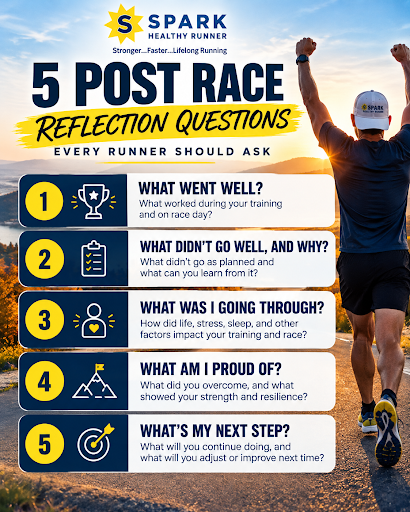
1. What Went Well During Your Training and Race?
The first question I want you to ask yourself is:
What went well?
This might sound simple, but it’s incredibly important.
As runners, we have a tendency to focus on what went wrong.
You might have run your second-fastest marathon ever, but if you missed your PR by two minutes, those two minutes become the only thing you think about.
Sound familiar?
Before analyzing mistakes, I want you to recognize your wins.
Think about what worked during your training, your race preparation, and race day itself.
What helped you succeed?
What do you want to repeat?
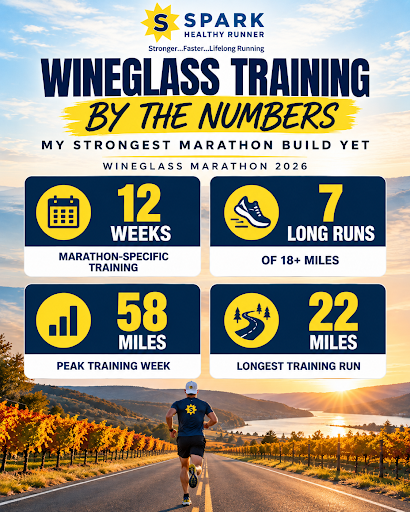
My Wineglass Marathon Reflection: My Strongest Training Cycle Yet
One of my biggest wins was completing the most challenging marathon training cycle of my life while staying healthy.
I completed a 12-week marathon-specific training block that included:
-7 long runs of 18 miles or more
-3 runs of 18 miles
-1 run of 19 miles
-2 runs of 20 miles
-1 run of 22 miles, my longest training run ever
-4 weeks of at least 49 miles
-58 miles during my peak training week
And here’s what made this particularly meaningful.
Much of this training happened during the hot and humid Connecticut summer.
Some workouts required adjustments because of extreme humidity or thunderstorms.
Rather than forcing every workout to happen exactly as planned, I adapted when necessary.
And that’s an important lesson for runners.
Consistency doesn’t mean being rigid. It means making smart adjustments so you can continue showing up.
I also incorporated marathon-specific workouts designed to improve my ability to maintain pace as fatigue accumulated.
One of my biggest confidence boosters was completing a 19-mile workout during the New Haven Road Race, including 10 miles at marathon pace and a strong finish.
That gave me confidence that my fitness was heading in the right direction.
My Marathon Fueling Strategy Was Another Huge Win
If you’ve followed my running journey, you know I experienced my first marathon DNF earlier in 2026 at Buffalo because of reflux.
So executing my fueling strategy successfully at Wineglass was a major accomplishment.
Here’s what worked for me:
-Approximately 134 grams of carbohydrates before the race
-258 grams of carbohydrates during the marathon
-Approximately 70 grams of carbohydrates per hour
-8 energy gels consumed during the race
I also practiced my hydration and sodium strategy and made adjustments based on the cooler race-day conditions.
Although I experienced some mild nausea, I was able to manage it and continue fueling.
And most importantly, I didn’t experience the reflux problems that affected my previous marathon.
Now, these numbers aren’t a prescription for every runner.
Your fueling needs will depend on your body, race duration, training, and conditions.
But documenting what worked for YOU is incredibly valuable.
Your turn: What are three things that went well during your last training cycle or race?
Don’t limit yourself to your finish time!
2. What Didn’t Go Well, and Why?
Now that you’ve celebrated your wins, it’s time to look at what didn’t go according to plan.
But here’s the important part.
Don’t just ask WHAT went wrong. Ask WHY.
Maybe you started too fast.
Maybe you struggled with fueling.
Maybe your legs felt heavy earlier than expected.
Or maybe something happened before the race that affected your strategy.
The goal isn’t to criticize yourself.
It’s to understand what happened so you can make better decisions next time.
My Biggest Wineglass Marathon Mistake Happened Before Mile 1
My biggest mistake at Wineglass happened before I even crossed the starting line.
I didn’t get into the starting area early enough!
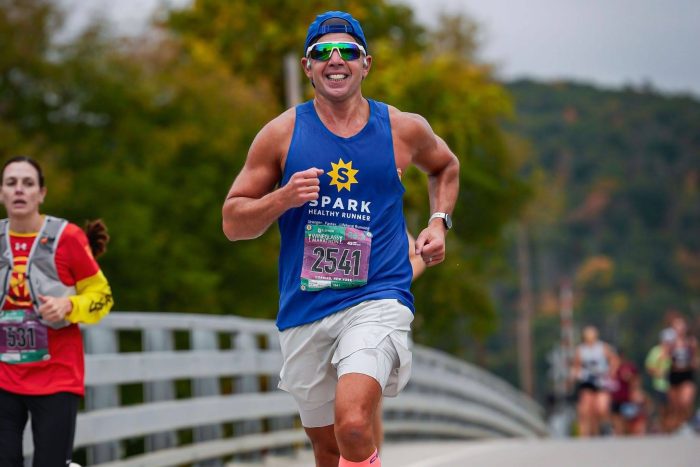
My coach and I had planned for me to start with the 3:40 marathon pace group.
But because of the layout of the starting area, including a large drainage ditch along the side of the road, I ended up much farther back than planned.
I crossed the starting line approximately two to three minutes after the gun.
And I never caught the 3:40 pace group.
Instead, I spent much of the early race passing runners.
Now, starting farther back wasn’t entirely negative.
It helped me avoid going out too fast.
But I also wonder whether running with a group targeting a similar pace might have helped me settle into a more consistent rhythm.
Could it have made the middle miles feel a little easier?
Possibly.
Would it have changed my finish time?
I’ll never know.
And that’s important to recognize.
Reflection isn’t about inventing a different outcome.
It’s about identifying something you can control next time.
My lesson: Your race strategy starts BEFORE the gun goes off!
For my next marathon, I want to be more intentional about my starting position and how I use the runners around me.
Your turn: What’s one thing that didn’t go according to plan during your last race, and what might have contributed to it?
3. What Was Going On in Your Life During Training?
Here’s a question that many runners overlook:
What was I going through during this training cycle or race week?
Because running doesn’t happen in a vacuum.
Your training is influenced by everything else happening in your life.
Work responsibilities.
Family commitments.
Travel.
Sleep.
Emotional stress.
Recovery.
All of these factors can influence how your body responds to training and how you perform on race day.
Sometimes a disappointing race isn’t simply about your running fitness.
You might have been navigating a particularly stressful season of life.
And that context matters.
My Wineglass Reflection: Protecting My Recovery
For Wineglass, I actually felt like I managed my life outside of running really well.
As a business owner, running coach, and podcast host, it can be challenging to set boundaries around work and content creation.
There’s always another project, email, or video waiting for my attention.
But during this training cycle, I made a conscious effort to prioritize my sleep, recovery, and mental energy.
I was also traveling solo for race weekend, which allowed me to keep things relatively simple.
I felt calm and prepared heading into the race.
That was a meaningful difference compared with some of my earlier marathon experiences, when I felt much more anxious.
And here’s the takeaway.
Sometimes reflection helps you identify a problem.
Other times, it helps you recognize something you did exceptionally well.
My lesson: Protecting your recovery and mental energy is part of training, not something separate from it.
Your turn: What was happening in your life during your training cycle, and how might it have influenced your running?
4. What Are You Most Proud Of?
This might be my favorite question of the entire reflection process.
What am I proud of?
Now, you might be wondering how this is different from identifying what went well.
Here’s the distinction.
Question one is about recognizing what worked.
Question four is about recognizing what those experiences say about YOU.
Your resilience.
Your commitment.
Your ability to adapt.
Your mental strength.
Your willingness to keep going when things get difficult.
Because your worth as a runner is NOT determined by your finish time.
My Wineglass Reflection: Fighting Through the Marathon Pain Cave
Around mile 19 of Wineglass, things started getting really hard.
My pace began slipping.
My legs were tired.
And I knew the final miles were going to be a battle.
But I never gave up mentally.
Instead, I relied on several strategies to keep myself engaged.
Strategy 1: Positive mantras
I had encouraging words written on my energy gels to help reinforce a positive mindset.
Strategy 2: Going fishing
This is one of my favorite mental strategies.
I would pick a runner ahead of me and focus on gradually reeling that person in.
Then I’d pick another.
And another.
Rather than focusing on how far I still had to run, I gave myself a smaller, more manageable target.
Strategy 3: Counting
By mile 25, even my mantras weren’t working as well anymore.
So I switched to counting.
One number at a time.
One moment at a time.
And I kept reminding myself:
EVERY SECOND COUNTS!
I was deep in the pain cave.
But I kept fighting.
And that’s something I’m incredibly proud of.
I Missed My Marathon PR but Achieved an Age-Graded PR
Here’s another reason I’m proud of Wineglass.
At 46 years old, I actually achieved an age-graded marathon PR!
Let’s compare my two fastest marathons.
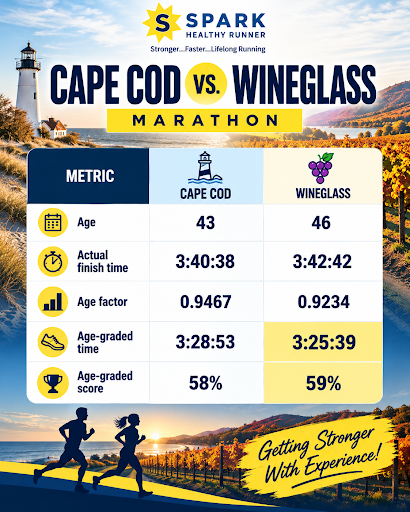
Even though my actual Wineglass finish time was 2 minutes and 4 seconds slower than Cape Cod, my age-graded performance improved.
My age-graded marathon time was 3 minutes and 14 seconds faster!
Age grading is one way of comparing running performances while accounting for age.
It’s not a perfect measure, and it doesn’t replace your actual finish time.
But it provides another perspective on performance as we get older.
And for those of us running in our 40s, 50s, 60s, and beyond, that can be incredibly motivating.
Getting older doesn’t mean we have to stop growing as runners.
We can continue building strength, improving our fitness, and accomplishing meaningful goals.
Sometimes progress simply looks different than it did a few years ago.
Your turn: What are you most proud of from your last race?
Maybe it was finishing your first marathon.
Maybe it was overcoming an injury.
Maybe it was sticking with your fueling plan.
Or maybe it was simply refusing to give up when things got hard.
Whatever it is, celebrate it!
5. What Will You Continue or Change Before Your Next Race?
The final step is where reflection becomes action.
Ask yourself two questions:
What’s one thing I want to CONTINUE doing?
And:
What’s one thing I want to CHANGE or improve next time?
You don’t need to completely overhaul your training after every race.
In fact, changing too many things at once can make it difficult to determine what’s actually helping.
Instead, identify the most valuable lessons from your experience.
Then use those lessons to guide your next training cycle.
My Wineglass Reflection: What Comes Next?
For me, there are several things I want to continue.
I want to maintain the training consistency I developed during this marathon build.
I want to keep incorporating strength training and marathon-specific workouts.
I want to continue practicing my fueling strategy.
And I want to maintain the boundaries I established around sleep, work, and recovery.
Those things worked.
There’s no reason to abandon them.
But there’s also something I want to improve.
I want to be more intentional about using a pace group and the runners around me on race day.
I want to give myself the best opportunity to settle into a consistent rhythm rather than spending unnecessary energy working my way through the field.
That’s one lesson I’ll carry into my next marathon.
And that’s what I want you to do too.
Your turn: Identify one thing you’ll continue and one thing you’ll change before your next race.
Keep it simple, specific, and actionable.
How to Turn Your Race Reflection Into a Better Training Plan
Once you’ve answered these five questions, the next step is to put your lessons into practice.
For example:
If you realized that inconsistent strength training contributed to your preparation challenges, build a realistic strength routine into your next training cycle.
If you struggled with race-day fueling, start practicing your nutrition strategy during long runs rather than waiting until race day.
If you consistently went out too fast, develop a pacing strategy and practice controlling your effort.
And if you discovered that life stress and poor recovery affected your training, consider how your next plan can better fit your schedule and responsibilities.
Remember, the goal isn’t to create a perfect training plan.
The goal is to create a plan that works for YOU.
Need Help Putting Your Race Reflections Into Action?
That’s exactly what we help runners do at Spark Healthy Runner.
Healthy Runner Academy gives you structured strength training, running education, and a supportive community to help you build a stronger foundation and continue improving.
And if you’re looking for more personalized guidance, our 1:1 Healthy Runner Coaching provides an individualized running and strength training plan, ongoing feedback, and a coach who can help you make adjustments based on your goals, training history, and recovery.
Whether you’re preparing for your first half marathon, returning from an injury, or chasing your next marathon goal, you don’t have to figure everything out on your own.
Explore our Healthy Runner Academy and coaching programs to find the level of support that’s right for you.
Download Your FREE Post Race Reflection Worksheet

Now it’s your turn to put these five questions into action!
I’ve created a FREE Post Race Reflection Worksheet to help you evaluate your last race, celebrate your wins, and identify what you want to improve.
This is the same reflection process we use inside Healthy Runner Academy as part of Stage 5 of our Healthy Runner Success Path.
And you can complete it in about 10 minutes.
🎁 Download Your FREE Post Race Reflection Worksheet Here
I encourage you to save your completed worksheets.
Over time, you’ll start recognizing patterns in your training, racing, and recovery.
You’ll see how your mindset evolves.
And you’ll have a record of just how far you’ve come.
Final Thoughts: You Cannot Fail If You Learn
After finishing my ninth marathon at Wineglass, I could have focused entirely on missing my personal best by two minutes.
But taking the time to reflect helped me see the bigger picture.
I completed my most challenging marathon training cycle while staying healthy.
I executed my nutrition strategy.
I fought through the toughest miles without giving up.
And I ran my strongest age-graded marathon performance yet.
Those are meaningful accomplishments.
And now I have a clearer understanding of what I want to continue and what I want to improve.
I want that same experience for you.
Because whether your last race went exactly as planned or was filled with unexpected challenges, there’s always something you can learn.
Your finish time tells you how fast you ran. Your reflection tells you how you can GROW!
And remember…
You cannot fail if you LEARN!
Keep running strong!
Dr. Duane Scotti
Physical Therapist, Running Coach, Educator, and Founder of Spark Healthy Runner
Watch or Listen to Healthy Runner Podcast Episode 311
Do THIS After Every Race (Most Runners Skip It!) | Post Race Reflection
In Episode 311, I walk you through these five questions and share even more behind-the-scenes lessons from my Wineglass Marathon experience.
Watch or listen to the full episode of the Healthy Runner Podcast and use your free worksheet to follow along.
Related episode: How to Strengthen Your Body for Better Running — Episode 253
Learn how to build a stronger foundation during your base-building period between races.

With Healthy Runner Coaching, you’ll get an individualized run and strength plan with expert coaching and support based on your goals and how your body is responding.
Or join the Healthy Runner Academy for our step-by-step system to help you get stronger, stay healthy, and become a lifelong runner.
Learn More About Healthy Runner Coaching
Join the Healthy Runner Academy
Get my full personal running story here

There are six parts of your running journey that need to be optimized so you can run strong and last long! Learn them here.
Want these to land in your inbox each and every week so you can learn how to become a stronger, faster, lifelong injury free runner?

Subscribe to my weekly newsletter here!
Thanks for reading!
Yours in health,
Duane
Connect with Dr. Duane:

Dr. Duane Scotti, DPT, PhD, OCS is a running physical therapist, run coach, host of the Healthy Runner podcast, and founder of Spark Healthy Runner and has been a leader in the rehab and running community for 20+ years.
Duane initially started running as an adult, wanting to add some cardio to his gym sessions. After having hip surgery, his doctor advised him to get off the treadmill and run outside. Without having fully recovered, Duane suffered his first running-related hamstring tendon injury and many others as a novice runner early on.
As a coach, he has guided thousands of athletes back to running, finishing their first marathon, crushing a personal best, and even the elusive Boston Marathon qualifying time.
After 19 years teaching in higher education, Duane decided to step away as a Clinical Associate Professor of Physical Therapy to pursue his passion educating the running community. Through his signature 1:1 coaching program, Healthy Runner Academy membership, weekly videos, and podcast episodes, he empowers runners to get stronger, run faster, and enjoy lifelong injury free running without having to stop running to get over an injury. Dr. Duane truly believes that anyone can run and that all runners should be treated differently when recovering from an injury. He is on a mission to change the traditional thinking that running causes “overuse injuries” or “your body is just not meant to run” and you must “take a break” to get better. Through strength and run specific training you can grow a strong mind, strong body, and just keep running!
Duane received his Bachelor of Health Science degree and Master of Physical Therapy degree from Quinnipiac University in 2001 and 2003. He then went on to receive a clinical Doctor of Physical Therapy and a Ph.D. in Physical Therapy from Nova Southeastern University in 2017. Duane is a board-certified Orthopaedic Clinical Specialist, RRCA Certified Running Coach, Certified Mulligan Practitioner, certified in dry needling and has advanced training in spinal manipulation and rehabilitation for runners.
As an athlete, Duane is an adult-onset runner, 9x marathoner, avid half marathoner, and enjoys challenging himself to learn and grow in his personal running journey!
A native New Yorker from Long Island, Duane currently lives in Cheshire, Connecticut with his wife Deb and his two teenage daughters who are competitive volleyball players. They all love to explore new beaches along the east coast.
Get weekly running tips on the Healthy Runner Podcast…available wherever you get your podcasts!


Related posts
Injured, sick, or unable to run? Discover 5 ways to become a stronger runner, avoid common recovery mistakes, and return to running with confidence.Read More
Discover travel nutrition tips for runners and learn what to eat, pack, and drink when traveling for a marathon, half marathon, or destination race.Read More

Learn how to keep running strong after 40 with insights from Jon Levitt. Discover the training, recovery, and mindset strategies that help runners stay healthy for life.Read More

“I don’t have enough words to express my gratitude towards Duane Scotti and the Spark Healthy Runner program. When I started working with Duane, I had been dealing with chronic shin splints/posterior tibialis tendinitis for almost a year.
I had worked with multiple other coaches and physical therapists with little success and was at the point of almost giving up on my love for running. Duane is so kind, thoughtful and knowledgeable as both a physical therapist and running coach. Our first virtual meeting lasted two hours because he was so meticulous in his assessment. His strength and running program is progressive and created so that you can continue to build strength and mileage as you heal. His strength program is unique, effective, and fun.
Additionally, his warm-up routine is awesome and includes drills that over time have made me a more efficient runner. His training platform is easy to use, and he is always readily available to chat when problems or questions arise.
Over four months of working with Duane, I have built back to five days a week of running and am almost back up to my pre-injury weekly mileage and long run distance. Whenever I have flare ups or setbacks, Duane reassures me and makes necessary adjustments so that I can continue to progress in my running journey. I have had so much success with him so far that I have signed on for four more months so that he can help me to continue getting stronger as I train for the Dopey challenge in Disney World.
If you are struggling with a running injury and are feeling hopeless, you have to reach out to Duane Scotti. Of course, you will have to put in a lot of hard work, but with Duane by your side, you will be able to achieve your goals and more. Thank you Spark Healthy Runner for bringing the spark back to my running!”

You can teach an old dog new tricks!!! I have never considered myself a runner and I knew I needed to be smart about it because I am no spring chicken. Spark preached getting strong and healthy to be injury free and they practice what they preach. I am soooo glad I made the investment in me! I finished my half marathon last weekend and couldn’t be any happier! The program fed me all the steps I needed to essentially learn how to run long distance, build strength, nutrition help, a forum of other runners and probably most important was the 1:1 coaching. I had no idea how to tackle training for a 1/2 marathon and this program broke all of it down, had it individualized for me and we tweaked as we went to make sure I was staying healthy and strong. I had so many questions the week prior to my race and Coach Cat was always there for me and answering all the questions and issues I had-and believe me there were a lot! The biggest benefit I think I got was the strength. I am strong and fit. But most important was what I gained emotionally. I built confidence and strength I didn’t know I had, even at my age. Honestly could not have done this without Spark Healthy Runners!

My Healthy Runner journey started after I had battled bilateral achilles pain for a few months and was frustrated how it affected my running. As soon as I talked to Duane I knew I had made the right decision. His positivity, enthusiasm and genuine care are infectious. The training plan that was tailored to me included specific exercises to rehab my injury and I was so excited that I didn’t have to stop running. It took patience to only run slow for a few weeks but I trusted the process and it got me me to where I am now: running pain free. We made adjustments to the plan throughout whenever needed having someone in your corner that is always there with guidance and support throughout the process was invaluable.
I just ran my second half marathon, both with Duane’s coaching, and PR’d by over 9 minutes! I got all choked up in the last mile when I realized that I felt strong and could still kick it up a notch.
I’m so thankful for the Healthy Runner program, community and the entire coaching team for all the support!